|
The data presented in this article was updated in February 2026. For more information, please refer directly to the original source.
|
Cross-sectional resources
- Focus 2030 and Women Deliver conducted a 17-country survey to measure the level of public support for gender equality, the actions people want their governments to take on each of the six Action Coalitions, and the gendered impact of the Covid-19 pandemic :
-
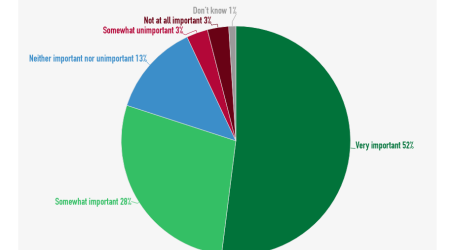
- 80% of respondents say that gender equality is an important issue to them personally.
- More women than men reported experiencing emotional stress and increased household chores during the Covid-19 pandemic.
- Overall, to advance gender equality, ending gender-based violence is the top priority.
- The World Bank publishes a series of sex-disaggregated and gender indicators on agriculture, education, health, social development, and poverty. The World Bank Development Indicators also contain a Gender Data Portal :
- In 1975, 70% of girls and young women aged between 15 and 24 were literate (compared to 84% of boys and young men). This rose to 79% in 1990 (87% for boys and young men) and to 93% in 2024 (94% for boys and young men).
- In 2024, 26% of women and 26% of men in paid employment worked in agriculture.
- In 2024, 2,3% of employed women and 5,2% of men were company managers.
- 34 % of businesses were owned by women in the world in 2024.
- In 2024, 53% of people over 15 living with HIV were women, a proportion which has been constantly growing since 1990 when 48% of people living with HIV were female.
- Birthrates for adolescent girls aged 15-19 have fallen from 74 births per 1000 girls in 1990 to 39 per 1000 in 2023.
- Equal Measures 2030 calculates in the SDG Gender Index the gender equality scores of 139 countries in relation to meeting the Sustainable Development Goals :
- The 2024 edition estimates that more than 2,4 billion girls and women lived in countries with "poor" or "very poor" gender equality scores.
- At the current rate, the world will reach an overall gender equality score of 68,9 out of 100 in 2030: the Sustainable Development Goals will therefore not be met.
- To date, none of the 139 countries in the Index has achieved gender equality.
- The OECD 2023 Social Institutions and Gender Index project provides data and country factsheets analysing the level of discrimination in laws, social norms and practices in 179 countries, across a variety of different themes : child marriage, inheritance, unpaid domestic or healthcare work, domestic violence, reproductive health rights, access to property rights, land and non-land assets, the right to work, participate in politics, or access to justice).
- 16% of women worldwide live in countries where domestic violence is not criminalized.
- 13% of girls worldwide are married before the age of 18.
- Women make up only 27% of members of parliaments worldwide.
- The United Nations Development Programme’s (UNDP) Gender Social Norms Index, based on responses to seven survey questions in 80 countries, provides information on prejudice against women in four areas: political, educational, economic and physical integration. Its 2023 edition reveals no improvement in a decade, with nearly nine out of ten people worldwide still harboring sexist prejudices.
- The World Economic Forum publishes the annual Global Gender Gap Report, which examines evolutions in gender gaps in four areas: economic participation and opportunity, educational attainment, health and survival, and political power.
- In 2025, the World Economic Forum estimates that it will take 123 years to close the global gender gap. In 2020, it estimated that it would take 99.5 years: the Covid-19 pandemic has pushed back the achievement of parity by another generation.
- « The landscape of gender data. Mapping players and initiatives by theme » presents an overview of gender data players, initiatives, and challenges across the world.
- UN Women and UNDESA publish the annual Gender Snapshot, a report that compiles gender equality data related to each of the Sustainable Development Goals. The 2025 edition estimates that at the current rate, 351 million women and girls will still live in extreme poverty by 2030.
- The book Equality within Our Lifetimes (2023) published by the World Policy Center analyzes solutions and progress on girls’ education, employment discrimination, sexual harassment, and women’s gender care needs in 193 countries.
- Nearly three-quarters of the world’s countries have laws specifically prohibiting sexual harassment in the workplace.
- Nevertheless, more than a quarter (28%) of countries that prohibit gender discrimination in the workplace do not guarantee protection from retaliation for reporting.
- Nearly one in five countries offer women from marginalized racial or ethnic groups no protection from at least one common form of workplace discrimination.
- Less than half of the world’s countries (46%) explicitly address gender discrimination as well as discrimination based on citizenship.
- The Our World in Data website presents a wide range of indicators on women’s rights around the world in the form of interactive maps and graphs.
- Every year, the European Institute for Gender Equality (EIGE) publishes the Gender Equality Index, which assesses gender equality in Europe using a wide range of indicators.
- In 2025, women in Europe needed to work 15 and a half months to earn the same annual salary as men.
- In 2024, nearly half of men and more than a third of women believed that a man’s most important role was to earn money.
Gender Based Violence
- UN Women’s Global Database on Violence against Women brings together statistical and legal data on gender-based violence and the different measures undertaken by governments. A summary of key data is also available :
- Throughout the world, one in three women and girls have already experienced physical and/or sexual violence. Less than 40% sought help, and of those, less than 10% went to the police.
- Of all of the women who were killed in 2025, 60% were murdered by their partner or a family member. 11% of male homicide victims were killed in the private sphere.
- The United Nations Office On Drugs and Crime publishes police data on sexual violence (administrative data) for each country up to 2024.
- The Intimate partner violence against adolescent girls: regional and national prevalence estimates and associated country-level factors (2024) report reveals that one in four adolescent girls aged 15 to 19 have experienced physical or sexual violence by an intimate partner during their lifetime.
- UN Women presents facts and figures on violence against girls and women around the world :
- Women with disabilities report higher rates of all forms of domestic violence than women without disabilities.
- Women and girls still account for the majority of recorded victims of human trafficking worldwide, representing 61% of the total in 2022, and most of them continue to be trafficked for sexual exploitation.
- The World Bank also collects information on legal protection against gender-based violence in 190 countries, published as an annex to the Women, Business and the Law report :
- UNICEF publishes data on challenges faced by children and young adults :
- Among women aged 20-24, 4% were married or in-union before the age of 15, and 19% before the age of 18 (rising to 10% and 36% respectively in less developed countries).
- At least 230 million girls and women have suffered female genital mutilation (FGM) in 29 countries for which representative data is available. FGM affects almost every woman in certain countries such as Somalia (99%), Guinea (95%), or Djibouti (90%). However, in 22 of the 29 countries, the majority of women and girls who have heard of excision think that this practice should not be continued.
- Worldwide, 650 million girls and women (1 in 5) between 18 and 29 have suffered sexual violence before the age of 18.
Economic Justice and Rights
- ILOSTAT hosts data from the International Labour Organization on employment, the informal economy, social protection, youth not in unemployment, education and training (NEET), etc. Specific information on women’s employment is available here :
- In 2025, women represented 50% of the working-age population, but only 40% of those in employment, and 30.5% occupying management positions.
- In 2025, 24% of women and girls aged 15-24 were not in employment, education or training (NEETs), compared to 17% of young men.
- In 2019, women were more exposed than men to informal employment in over 90% of sub-Saharan African countries, 89% of Southern Asian countries, and almost 75% of Latin American countries.
- In 2025, women collectively earned 52 cents for every dollar earned by men.
- Towards a better future for women and work: Voices of women and men (2016), a report from the International Labour Organization and Gallup, examines male and female attitudes and perceptions in 142 countries on women and work :
- 29% of women worldwide would prefer to work at paid jobs, and a similar percentage would prefer to stay at home (27%). 41% of women would prefer to do both. Men want the same for the women in their families: 28% would like these women to have paid jobs, 29% would like them to stay at home and 38% would prefer they do both.
- On average, 83% of women and 77% of men agree that it is acceptable for women in their families to work outside their home if they wish to. However, in households with children, this percentage drops to 73% for men (compared to 81% for men from households without children).
- For 22% of the world’s population, work-family balance is the biggest challenge faced by women in paid work. In second place, 12% say the biggest issue is the unavailability of affordable care services for children or relatives, and in third place with 10% declare it is because women are treated unfairly at work.
- The Women, Business and the Law World Bank dataset (2026) provides information on the laws and regulations that restrict women’s economic opportunities across 190 economies. Data categories include mobility, workplace, pay, marriage, parenthood, entrepreneurship, assets and pensions.
- On average, women have just two-thirds of the legal rights afforded to men in terms of economic security, career growth, and work-life balance. In countries where laws are in place to ensure these rights, they are generally only half enforced.
- 123 of the 190 economies covered by the dataset guarantee paid maternity leave of 14 weeks or more. But in only 100 of these is maternity leave fully funded by the government. And in 35 countries, dismissal of pregnant workers is not prohibited.
- 124 economies out of 190 offer paternity leave, of an average of 25 days.
- In 89 countries, the law does not mandate equal remuneration for work of equal value.
- In 41 countries, sons and daughters do not have the same inheritance rights, and in 43 countries, widows do not have the same inheritance rights as widowers as surviving spouses.
- In 78 countries, periods of absence due to childcare are not accounted for in pension benefits.
- Analysis shows that where the law ensures greater equality of economic opportunity between women and men, female labour force participation is higher, regardless of income levels, fertility rates, and female education. Having fewer discriminatory laws and policies in place also results in larger investments in health and education (both for women themselves and for the next generation), lower rates of sexually transmitted diseases, lower rates of maternal mortality and higher levels of female education.
- The Global Entrepreneurship Monitor regularly publishes the results of its global entrepreneurship surveys. In 2023-2024 :
- In 39 of the 46 countries surveyed, more men than women started a business in 2023.
- Long-established businesses are more likely to be run by men than new businesses: there are twice as many men running these businesses as women in 10 of the 49 countries surveyed, and three times as many in 5 countries.
- The Fortune Global 500 ranking of the world’s 500 largest companies reveals that only 32 of the 500 were led by women in 2025.
- The report Fair share for health and care: gender and the undervaluation of health and care work (2024) presents data on gender inequalities in care and personal assistance professions :
- Globally, it is estimated that women spend between two and ten times more time than men on unpaid domestic work.
- Women represent 67% of the global health and care workforce. They are overrepresented in lower-status positions and underrepresented in higher-status and management positions.
- The World Values Survey analyses public opinion from 100 countries (for the last wave of the survey, 2017-2022) on many issues, including women’s economic participation :
- 42% of men and 40% of women think that a child of pre-school age will suffer if their mother works.
- 21% of men and 16% of women think that a university education is more important for a boy than for a girl.
- 36% of men and 25% of women think that men make better business executives than women do.
- 61% of men and 61% of women think that being a housewife is just as fulfilling as working for pay.
- 35% of men and 28% of women think that when employment is scarce, men should have more rights to a job than women.
- 34% of men and 33% of women think that if a woman earns more money than her husband, it’s almost certain to cause problems.
- 7% of men and 5% of women say they are an active member of a trade union.
- The (2024) Global Financial Inclusion Database from the World Bank brings together data on financial inclusion for women and men from 123 countries :
- 90% of men and 77% of women over the age of 15 have a bank account.
- 51% of men and 47% of women accumulated savings in the previous year.
- The World Inequality Report (2026) includes data on income inequality between men and women worldwide and by region :
- In 2025, women earned 28% of labor income, while accounting for 55% of total working time (including domestic work).
- In all regions of the world, women’s incomes are lower than men’s.
- The Unfinished Business: The Private Sector and Gender Equality (2025) report presents data on women and the private sector :
- The labor force participation rate for women of working age (25-54) was 64.5% in 2024, compared to 92.2% for men.
- Bridging the gender digital divide could inject an additional $1.5 trillion into the global economy by 2030 and more than $100 trillion cumulatively by 2050.
Bodily Autonomy and Sexual and Reproductive Health and Rights (SRHR)
- The DHS Program STATcompiler presents data from the Demographic and Health Surveys from 90 countries, focusing on fertility, family planning, reproductive health, domestic violence, female genital mutilation, women’s empowerment, etc.
- The World Health Organization brings together statistics on maternal health and sexual and reproductive health.
- In 2023, the global maternal mortality ratio was 197 deaths per 100,000 live births. It was significantly higher in low-income countries (346 deaths per 100,000 live births) than in high-income countries (10).
- On average, 121 million unintended pregnancies were recorded each year between 2015 and 2019.
- The United Nations Population Fund’s State of the World Population Report annually reports on progress toward the Sustainable Development Goals related to maternal health, access to education, or sexual and reproductive health.
- The 2021 edition of the report provides an update on girls’ and women’s bodily autonomy. Globally, 45% of women do not have a final say in choices about their own sexual and reproductive health. In addition, 27% lack access to sexual education.
- The 2022 edition of the report documents unintended pregnancies around the world. A woman dies every 9 minutes from unsafe abortion. In developing countries, 13% of girls become mothers before reaching adulthood.
- The 2023 edition of the report calls for a halt to growing alarmism about demographic change, and reminds us that global fertility has evolved from an average of 5 children per woman in 1950 to 2.3 children per woman in 2021. Despite this, 44% of women in couples in the 68 countries surveyed are not in a position to make their own decisions about healthcare, sexuality or contraception.
- The 2024 edition highlights the progress made in reproductive health and rights on the occasion of the 30th anniversary of the International Conference on Population and Development (ICPD) and in the context of a widespread "backlash." Between 2000 and 2020, global maternal mortality decreased by 34%, thanks to better access to skilled and emergency obstetric care. Since 1990, the number of women using modern contraception has doubled, and the rate of unintended pregnancies has decreased by 19% between 1990–1994 and 2015–2019. However, challenges remain: in 69 countries, a quarter of women still cannot make their own decisions regarding healthcare, and a quarter cannot refuse sexual intercourse with their husband or partner.
- The 2025 edition tackles the subject of fertility and challenges preconceptions on the subject: while a fertility crisis is predicted across the globe, UNFPA demonstrates, with survey data to back it up, that an alarming proportion of adults find themselves hindered in achieving their goals in this area. Approximately one in five people say that fear of the future (climate change, environmental degradation, wars, pandemics, etc.) would encourage them or has encouraged them to have fewer children than they would have liked. Thirty-nine percent say that financial constraints have hindered or may hinder their ability to achieve their ideal family size.
- The United Nations Population Fund World Population Dashboard provides data on fertility, sexual and reproductive health, or sex ratios. For example :
- Among women aged 15-49, the average contraceptive prevalence rate (all methods) is 49%, rising to 68% for those married or in-union. 44% of women use a modern method of contraception, rising to 58% for those married or in-union.
- Across the world, 8% of women aged between 15-49 have an unmet need for family planning. This percentage is slightly higher for married or in-union women, at 11%.
- BMJ Global Health published a comparative analysis that estimates the rates of unintended pregnancies and the incidence of abortion in 150 countries between 2015 and 2019 :
- There is significant heterogeneity between countries within a region: in Niger, there is an estimated occurrence of 49 unintended pregnancies per 1000 women of reproductive age per year, compared with 145 in Uganda.
- The incidence of abortion is the highest in Southeast Asia, with 43 abortions per 1000 women of reproductive age per year (64 in Vietnam, 49 in China).
- The World Values Survey analyses public opinion from 100 countries (for the last wave of the survey, 2017-2022) on many subjects, including abortion.
- 36% of men (36% of women) worldwide declare that it is never justified to have an abortion. 10% say that it is always justified (11% of women) and 51% of men are in between (compared to 50% of women).
- The Progress on household drinking-water, sanitation and hygiene 2000-2022: Special focus on gender report, produced jointly by UNICEF and WHO, presents data based on 50% of the world’s population on the state of gender inequalities in terms of access to water, sanitation and hygiene (WASH) :
- Women and girls over the age of 15 are responsible for collecting water in 7 out of 10 households.
- In 22 countries for which data are available, among households with shared toilets, women and girls are more likely than men and boys to feel unsafe walking alone at night, and to face sexual harassment and other safety risks.
- In 51 countries for which data is available, women and adolescent girls living in the poorest households or with disability are the most likely to lack a private place to wash and change.
- In a study published in February 2026, the World Health Organization (WHO) examined the links between maternal mortality and conflict situations: in 2023, 55% of maternal deaths occurred in the 17 countries considered by the World Bank to be in conflict.
- The World Bank presents data on menstrual hygiene around the world :
- In five of the 51 countries for which data is available, more than 10% of women do not have access to appropriate hygiene products.
- In most countries with data, rural women have less access to private sanitation facilities during their menstrual cycle than their urban counterparts.
- In 11 of the 44 countries for which data is available, more than one-fifth of women do not participate in normal activities during their periods.
Feminist Action for Climate Justice
- The report The status of women in agrifood systems from the Food and Agriculture Organization of the United Nations presents statistics and information on the status of women working across agrifood systems.
- Worldwide, 36% of working women and 38% of working men worked in agrifood systems in 2019.
- A woman employed in agriculture earns 82 cents for every dollar earned by a man.
- Closing the agricultural productivity gap between men and women, and the wage gap in agri-food system jobs, would increase global gross domestic product by 1% (or nearly 1,000 billion USD). This would reduce global food insecurity by around 2 percentage points, reducing the number of food-insecure people by 45 million.
- The Women’s Environment and Development Organization’s Gender Climate Tracker provides data and analyses on women’s participation in climate diplomacy and gender-responsive climate policies.
- At the 29th Conference of the Parties (COP 29), held in November 2024 in Baku, approximately 35% of the party delegates were women, and 24% were female heads of delegations. In journalism, over 64% of the professionals present were men, and in the national delegations, just over 6,100 women were accredited out of 17,680 representatives. Of the 1,128 participants associated with the United Nations, 54% were women.
- At the 28th Conference of the Parties (COP 28) of the United Nations Framework Convention on Climate Change (UNFCCC) in 2023, women made up around 34% of national Party delegations. 29% of Heads of Delegation were women. In 2008, these two statistics were 32% and 15% respectively. In 2023, women were under-represented in many UNFCCC national Party delegations, in particular in senior roles and in delegations from the most climate-vulnerable countries. At this rate, gender balance in delegations will be reached by 2042.
- Nationally Determined Contributions (NDCs) represent each country’s commitments on reducing national emissions and climate change adaptation. Analysis of 190 NDCs shows that 64 countries refer to women or gender. Among those 64, 34 countries portray women as a vulnerable group, just 15 refer to their role as active parties in decisions or policies on climate change, and only 6 describe women as agents or actors of change. Nevertheless, the majority of the more than 40 NDCs added or updated in 2021 mentioned women or gender and recognized the importance of including them in these contributions.
- The World Values Survey analyses public opinion from 100 countries (for the last wave of the survey, 2017-2022) on many topics, including membership of different organizations :
- 5.6% of men and 4.5% of women say they are active members of environmental organizations.
- The Malala Fund produces data on girls’ education around the world. The report A greener, fairer future (2021) presents data on the positive impact of girls’ education on combating climate change :
- In 2021, climate disasters prevented at least 4 million girls in low- and middle-income countries from continuing their education.
- Yet, if all girls had access to quality education, fossil fuel emissions could be reduced by 37-41% by the end of the century.
Technology and Innovation for Gender Equality
- The UNESCO offers statistical insights into education, science, culture and communication.
- According to the Women In Science database, less than 31% of researchers in the world were women in 2022.
- According to the I’d blush if I could: closing gender divides in digital skills through education report :
- 17.5% of technology sector employees are women.
- Men are around four times more likely than women to have advanced information and communications technology (ICT) skills, such as programming.
- In G20 countries, just 7% of ICT patents are filed by women.
- Recruiters for technology companies in Silicon Valley estimate that the applicant pool for technical jobs in artificial intelligence and data science is less than 1% female.
- 36% of Science, Technology, Engineering and Maths (STEM) and 29% of ICT students are female.
- Women hold only 24% of all digital sector jobs.
- Only 6% of mobile application and software developers are female.
- Chapter To be smart, the digital revolution will need to be inclusive from the UNESCO Science Report (2021) :
- 44% of PhD graduates worldwide are women.
- 22% of professionals working in the artificial intelligence sector are women.
- 2% of capital directed to startups in 2019 went to startups founded by women.
- The United Nations International Telecommunications Union publishes sex-disaggregated data on internet use by country. In 2025, 71% of women and 77% of men in the world used the internet. More information on the digital gender divide.
- The GSM Association publishes data on mobile phone use by women and men :
- Women in low- and middle-income countries are, on average, 9% less likely to own a mobile phone than men, and 15% less likely to use mobile internet than men (25% in 2017). Cost remains the greatest barrier to owning a mobile phone.
- These gaps have resulted in a loss of $126 billion in GDP for 32 low- and middle-income countries in 2020.
- Closing these gender gaps could generate $230 billion in revenue for mobile operators by 2030.
- The International Labour Organization publishes information on global shares of employment by sex and sector :
- 73% of activities in the accommodation and restaurants sector, which employs a large proportion of women, are susceptible to automation. Conversely, education and health and social work, which are highly feminized sectors, exhibit the lowest risk of automation due to the personal interaction component that is embedded in such occupations.
- The Global Financial Inclusion Database (2024) from the World Bank brings together data on the use of digital technology for business in 150 countries: 67% of men and 60% of women over the age of 15 have made or received a digital payment in the last year.
- Notably, only 39% of countries regularly produce gender-disaggregated statistics on information and communications technologies, according to the "Review of the implementation of the agreed conclusions adopted at the forty-seventh session of the Commission on the Status of Women".
- Furthermore, according to a 2023 study, men are 1.88 times more numerous than women among scientific authors, and they are 3.2 times more numerous among the most cited authors. However, the gap has been narrowing since the 1990s.
- The Malala Fund produces data on girls’ education around the world :
- The Girl’s Vision for Education (2025) report surveyed the perceptions and priorities regarding education of 810 girls aged 8 to 25 across 30 countries. 67% of the girls interviewed in focus groups cited economic barriers as the main obstacle to education.
Feminist Movements and Leadership
- The Inter-Parliamentary Union database provides information on female politicians, ministers or heads of state and government, and on female portfolios and electoral quotas. By January 1, 2026, 27% of the world’s parliamentarians and 20% of its speakers were women.
- The Women in Politics: 2025 database tracks the number of women elected worldwide: 12% of the heads of state, and 8% of the heads of government in the world were women.
- The Women in Parliament in 1995-2025 report also provides an overview of the state of parity in parliaments around the world over the last 30 years. By the end of 2024, 71 countries had at least 30% of women in their lower or single house, compared to five seats than in 1995. The report highlights the key role of quotas in advancing parity: chambers with legislative quotas elected 31% of women in 2024, compared to 16% in chambers without quotas.
- The International Institute for Democracy and Electoral Assistance Gender quotas database presents legislation on electoral quotas by country. The OECD Social Institutions and Gender Index 2023 synthesizes this data globally :
- In 2023, out of 178 countries and territories, 98 had introduced quotas, reserved seats or other measures to promote female political participation at the national level.
- Globally, 48% of the population think that men make better politicians than women.
- At this rate, it will take 40 years to reach gender parity in parliaments.
- The International Labour Organization publishes information on the representation of women in trade and employers’ organizations.
- Female membership in national social dialogue institutions (economic and social councils, tripartite commissions and labour advisory boards) ranged from 20% to 35% in 2018.
- The Women in Multilateralism 2026 study, carried out by GWL Voices, analyzes the gender composition of the governing bodies and senior management of the main multilateral organizations.
- Since 1945, 26% of the leaders of one of the 14 organizations that make up the United Nations Secretariat have been women. Today, that proportion is 50%.
- In 2025, 46% of women were at the helm of one of the 62 organizations studied by GWL Voices.
- The World Values Survey analyses public opinion from 100 countries (for the last wave of the survey, 2017-2022) on many subjects, including membership of different organizations. For example :
- 3% of men and 8% of women claim to be an active member of a feminist organization.
- In 2023, the Kvinna till Kvinna Foundation conducted a survey of 458 women human rights defenders, revealing that three out of four respondents (or their organizations) had been threatened or harassed for their work, an increase of 15 percentage points since 2021.
- The Global Media Monitoring Project (2025), led by UN Women, provides data on the place of women in the media.
- The global edition, accompanied by a summary of key figures, tells us that although women represent half of humanity, they account for only a quarter of media sources.
- According to the French edition, gender-based violence accounts for only 2% of daily news coverage, and 75% of the expertise presented in the French media is held by men.
- The Women’s Power Index, created by the Council on Foreign Relations and the Foreign Policy program, analyzes women’s political participation in the 193 member states of the United Nations :
- In 2026, only 26 countries have a woman at the head of their government.
- Only 7% of countries have achieved parity in their legislative bodies.
- The We the Women survey, conducted in 2024 in 185 countries around the world by the United Nations Office for Partnerships, asked nearly 26,000 women about their priorities and ambitions for the future :
- 85% of women surveyed consider themselves advocates for women’s rights.
- 69% of women say they need better representation in leadership positions at the national and global levels in order to play a more significant role in the future of the world.
Education
- The UNESCO Institute for Statistics (UIS) publishes data on all levels of education disaggregated by sex, region, country, age and other categories.
- The World Inequality Database on Education allows users to view data on 26 education-related indicators in 170 countries, broken down by various categories, including gender.
- The I’d blush if I could: closing gender divides in digital skills through education (2019) report presents data on inequality in higher education, revealing that girls and young women are overrepresented as students in the fields of Education (70%), Health and Welfare (69%), Art and Humanities (62%), Social Sciences (61%) and Natural Science (56%). Conversely, women and girls are minority students in the fields of STEM (36%) and ICT (29%).
- UNICEF publishes data on the links between gender and education: while, on average, the gap between girls and boys in access to school worldwide has now almost closed, inequalities persist in certain regions of the world. This is the case in Central and East Africa, where 31% of girls of primary school age do not attend school, compared to 24% of boys.
- The OECD report Gender, Education and Skills: The Persistence of Gender Gaps in Education and Skills (2023) presents gender inequalities in education and access to employment in OECD countries and their partners.
- Young men are more likely than young women to lack an upper secondary and a tertiary qualification, on average across OECD countries. This gender gap in favour of women has only increased between 2000 and 2020.
- Women in tertiary education choose fields of study with relatively less mathematical content, therefore they are also much less likely than their male peers to practice advanced mathematics daily.
- In all OECD and partner countries, men are more likely to be employed and earn higher wages, than women.
- The Global Education Monitoring Report 2025 presents data on gender inequalities in access to education :
- In upper-middle-income and high-income countries, there is a 20-point gap between the sexes in leadership positions in secondary education.
- In higher education worldwide, only 30% of leaders are women.
Funding for gender equality
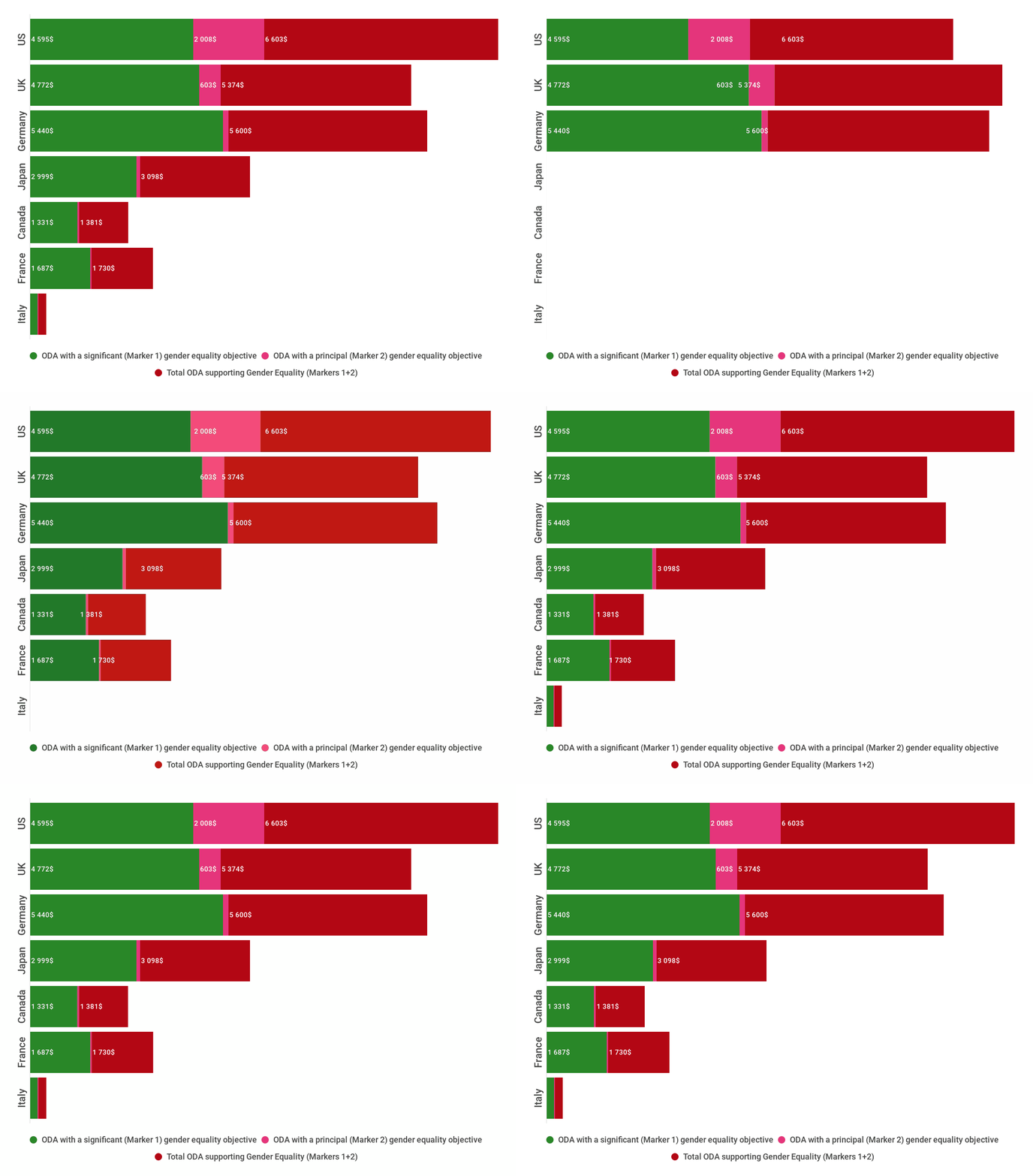
- The OECD publishes annual data on Official Development Assistance (ODA) analyzed according to the “gender equality policy marker”. In 2022-2023, 45,8% of donors’ bilateral commitments had gender equality and women’s empowerment as their principal or significant objective.
- Ahead of the Generation Equality Forum, the OECD published an analysis of development finance directed to each Action Coalition.
- Data2x published a report in 2021 on the state of funding directed to gender data production :
- Funding has stagnated since 2009, despite growing needs for gendered statistics production.
- To build and maintain key gender databases, an additional $500 million in donor funding is needed annually by 2030.
- In addition, Paris 21, a partnership hosted by the OECD Statistics Directorate, analyzed official development assistance for strengthening gender statistics around the world. The PRESS 2025 report reveals that donations to gender data production declined for the second consecutive year in 2023 (-6.8%).
- Open Data Watch produces an annual report that in 2020-21 provided an assessment of the coverage and openness of official statistics in 187 countries. Between 2016 and 2020, the publication and transparency of gendered data improved by 21%, only half as much as other types of data.
- The UN Human Rights Council published their report in 2019 on the Situation of Women Human Rights Defenders :
- In 2014, only 0.5% ($192 million) of aid for gender equality went to women’s rights organizations in the North and South, compared to 1.2% in 2011. 92% of the funding for gender equality went to international NGOs or NGOs in donor countries, and only 8% to local NGOs.
- The 2025 Donors Delivering for SRHR report analyzes funding for sexual and reproductive health in the Official Development Assistance (ODA) of OECD Development Assistance Committee (DAC) countries :
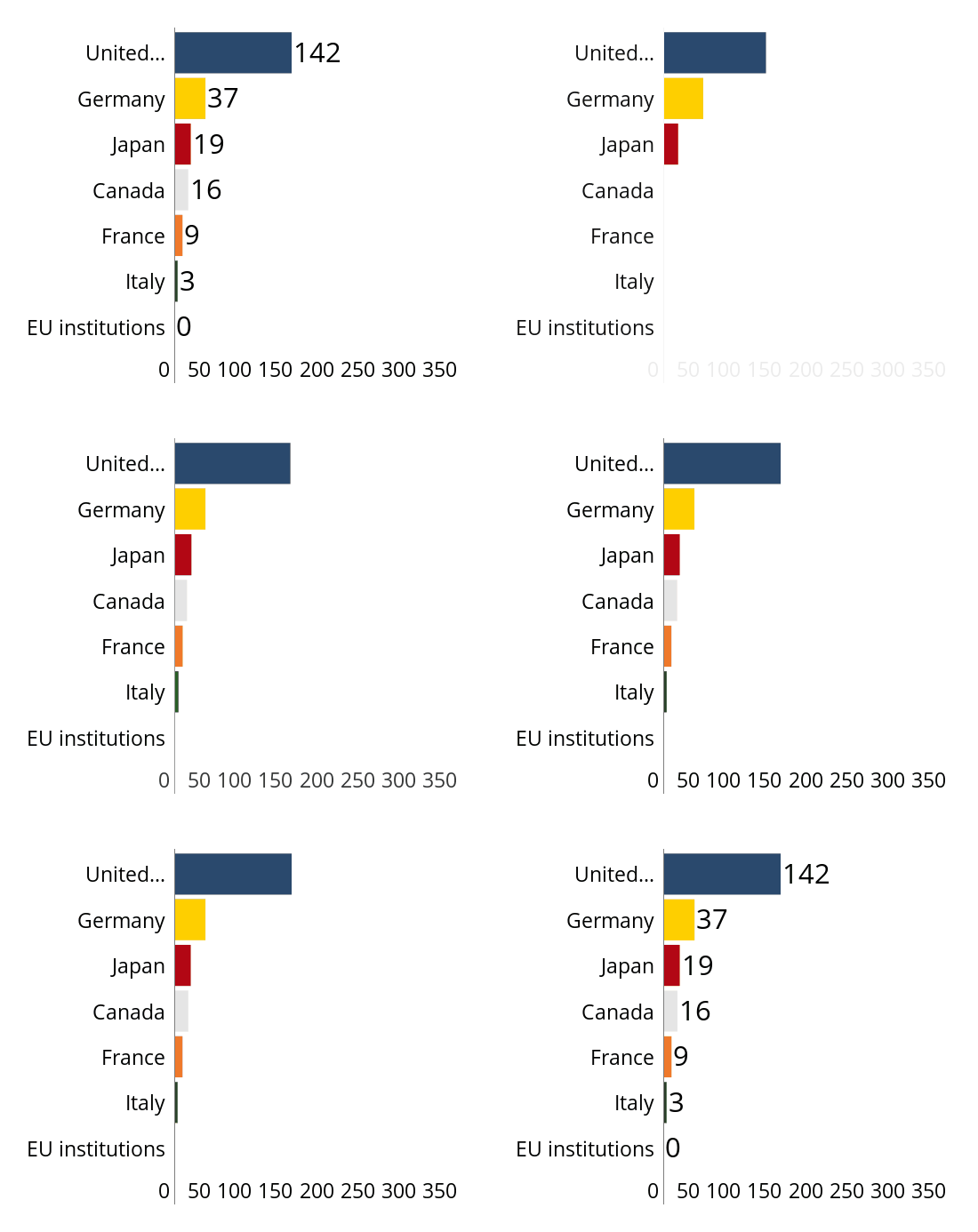
- The United States, the United Kingdom, Germany, France and Canada are the five largest donors to sexual and reproductive health (by amount of ODA allocated).
- Despite an overall increase in funding in 2022, only 5 out of 32 donors devoted at least 4% of their ODA to sexual and reproductive health.
- An OECD note published in 2022 takes stock of funding for gender equality in Sahelian countries: in 2018-19, 41% of official development assistance to the region had gender equality as a primary or significant objective, up from 18% in 2010.
While the collection of gender-disaggregated and sex-specific data has progressed considerably in recent years, many inequalities remain undocumented. As such, Data2x has identified the current gaps.
Moreover, where data exists, it is not always sufficiently accessible. The organization Open Data Watch publishes an annual indicator measuring the completeness of each country’s statistical supply, as well as the compliance of these data with international standards of openness. The indicator includes a specific measure for gender statistics: in 2024, the world scored an average of 49, on a scale of 0 to 100, where 100 represents the best performance in collecting and opening gendered data.
Documents to download
 Social Institutions & Gender Index - OCDE
 Subscribe to our newsletter
 Replier le menu