Focus 2030
 Subscribe to our newsletter
 Replier le menu
Discover Focus 2030
Our organisation Our key programmes Our team Our partners Documentation Reports and publications News
Published 3 March 2026 in Interviews en
| With March 8 and CSW70 approaching, Focus 2030 wishes to highlight the state of gender inequality around the world, in a context marked by significant cuts in Official Development Assistance and growing attacks on the rights of women and sexual and gender minorities. On this occasion, Focus 2030 is providing information, facts and figures, campaigns, and interviews with experts to report on the progress made and the road ahead to achieve equality. See our special report. |
Focus 2030: Active in Burkina Faso, Côte d’Ivoire, Senegal, Togo, and Benin, Speak Up Africa’s Voix EssentiELLES program supports community organizations so that women and girls have a say in decisions that affect their health and future. On the ground, what are the main obstacles they face today? And, conversely, what concrete progress have you observed?
Christiane Yelibi: The experiences of Voix EssentiELLES reveal a two-sided reality: structural barriers that still hinder equality, but also tangible changes that are gradually transforming local decision-making dynamics.
The first obstacle, unanimously mentioned, concerns the weight of sociocultural norms and gender inequalities. In many communities, decisions relating to the health of women and girls—particularly in terms of sexual and reproductive health—remain strongly influenced, if not controlled, by spouses, heads of families, or traditional leaders. Women’s voices are still perceived as secondary, and their leadership can be seen as challenging established roles. This patriarchal structure limits their autonomy and effective participation in decision-making spaces.
Added to this is low health and legal literacy. Many women and girls lack reliable and appropriate information about their rights, available health services, mechanisms for protection against gender-based violence (GBV), and referral channels. In rural areas, language barriers, isolation, and lack of schooling reinforce this information exclusion.
Economic constraints are another major obstacle. Poverty, financial dependence, and precariousness—including in prisons or in domestic work situations—reduce women’s ability to access care, report violence, or seek redress. Certain specific groups are particularly vulnerable: women living with HIV, adolescent domestic workers, women prisoners, and internally displaced women.
Furthermore, stigma, fear of reprisals, and the trivialization of GBV discourage reporting. Informal settlements are often preferred over holistic care and access to justice. Finally, geographical distance from health facilities, the cost of care, the lack of qualified personnel and, in some contexts, security or administrative constraints (particularly in prisons) limit effective access to services.
Despite these structural challenges, organizations are seeing significant progress.
Firstly, there has been a gradual strengthening of female leadership. More and more women and girls are participating in community dialogue forums, speaking out publicly, and engaging as community relays, mediators, or peer educators. Some now play leading roles in local advocacy efforts.
Awareness-raising activities (radio broadcasts, community dialogues, mass campaigns, interventions in markets or prisons) have contributed to a notable improvement in the level of information. Women are more aware of their rights and the services available to them, and adolescent girls are more likely to discuss topics that were once taboo, such as menstrual dignity, family planning, and GBV.
Another important step forward is the increase in the reporting and referral of GBV cases, reflecting greater trust in community and institutional mechanisms. Coordination between actors (community relays, health centers, local authorities, religious and traditional leaders) has improved, making the care chain more functional.
Finally, a gradual change in attitudes is noticeable. Local, traditional, and religious authorities, as well as male allies, are showing increasing openness to women’s participation. In some contexts, political will and the involvement of state authorities reinforce these dynamics.
In short, while obstacles remain deep-rooted and structural, feedback from CSOs shows that, thanks to strategic and local support, women and girls are gradually moving from being beneficiaries to becoming agents of change within their communities. Beyond individual changes, these dynamics are gradually influencing local governance mechanisms. Across several countries, Voix EssentiELLES now participates in health consultation frameworks, health center management committees, and municipal planning forums. Their presence helps to ensure that priorities such as combating GBV, accessibility of services, and reproductive health are included in local action plans and municipal budgets.
Focus 2030: Working closely with local communities, you are in a prime position to witness the difficulties faced by women and girls in accessing healthcare and essential services. With official development assistance falling rapidly and dramatically (-18% anticipated in 2025, or $40 billion), affecting international organizations, NGOs, partner countries, and programs promoting health and gender equality, are you already seeing concrete effects on the women and girls you support?
Christiane Yelibi: According to community organizations Voix EssentiELLES, the rapid and significant decline in official development assistance is already having concrete effects, both on the operational capacities of local structures and on the daily lives of the women and girls they support.
The first impact concerns the reduction in available resources. Several organizations report delays or reductions in funding, leading to the limitation or even cancellation of certain activities: mass awareness campaigns, radio broadcasts, training, safe spaces, post-intervention follow-up, psychosocial support, and advocacy actions.
Follow-up activities, which are essential for consolidating gains, are often the first to be compromised. Territorial coverage is declining, particularly in remote or highly vulnerable areas. Some organizations are struggling to maintain the regularity of community interventions and are having to rely more on volunteers, which is putting additional pressure on their teams.
The decline in funding also creates institutional uncertainty: difficulty in long-term planning, expanding activities to new areas, or maintaining guidance and referral services. For organizations that are already financially fragile, this budgetary contraction directly threatens the continuity of the achievements built up over the years.
On the ground, women and girls are the first to be affected. Several organizations report an increased risk of disruption in access to essential services, particularly when partner health structures themselves are subject to budget cuts.
This translates into:
Adolescent girls appear to be particularly vulnerable. When resources become scarce, households prioritize subsistence spending, relegating specific needs such as reproductive health, violence prevention, and protection against early marriage to the background. The reduction in prevention activities in schools and communities increases the risks of early pregnancy, school dropout, and exposure to violence.
Economic empowerment programs are also affected. Without vocational training or income-generating activities, many women remain economically dependent, which limits their ability to access healthcare, file complaints when their rights are violated, or participate in decision-making spaces.
The contraction of international aid also has an impact on the ability of local actors to influence public policy. When funding becomes scarce, spaces for consultation, accountability mechanisms, and budget monitoring initiatives led by civil society are weakened. Without this citizen vigilance, however, gender equality priorities risk being relegated to the background in national and local budgetary decisions.
Despite this worrying context, CSOs highlight the growing determination of women and girls. Many are becoming more confident in speaking out, filing complaints, taking up positions in local bodies, or considering running for election. These advances demonstrate the impact of the investments made to date.
The current situation also reinforces the need for sustainable local solutions: diversifying partnerships, mobilizing national resources, strengthening community leadership, and advocating for direct, flexible, and sustainable funding for local organizations.
In short, the decline in aid is not an abstract threat: it is already resulting in concrete restrictions on access to services, a weakening of protection mechanisms, and a risk of worsening inequalities. However, the resilience of community organizations and the rise of women’s leadership offer essential levers for protecting and consolidating the gains made.
Focus 2030: In the areas where Voix EssentiELLES is deployed, can you give us specific examples showing how the participation of women and girls in the design and implementation of health initiatives concretely improves the consideration of their needs?
Christiane Yelibi: When women and girls participate in the design of health initiatives, the impact goes far beyond simply improving services. Their involvement helps identify obstacles that are not sufficiently addressed in public policy, directs investment towards real needs, and institutionalizes inclusive solutions in municipal and sectoral plans.
| BÉNIN - WOMEN WITH DISABILITIES BREAK DOWN BARRIERS TO SEXUAL AND REPRODUCTIVE HEALTH SERVICES IN PARAKOU (FJAD)
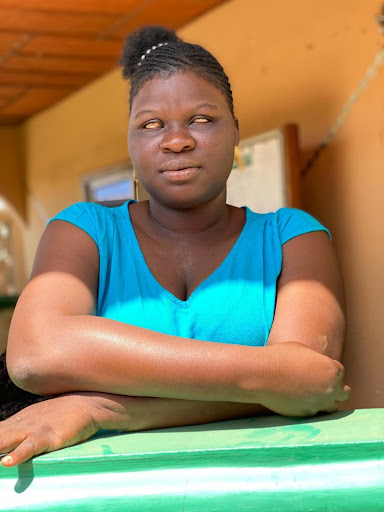
In Parakou, women with disabilities have long faced multiple barriers to accessing sexual and reproductive health (SRH) services. Healthcare facilities are largely unsuitable, due to the lack of access ramps, adjustable beds, or accessible guidance devices. In addition to these physical constraints, persistent stereotypes and stigma surrounding disability contribute to the exclusion of the specific needs of women with disabilities from community health policies and decisions. To address this situation, the Handi’Women DSSR project, led by the FJAD, has adopted a participatory and inclusive approach. A participatory study was first conducted to document the specific barriers encountered by women with disabilities. The results revealed that less than 10% of them had received appropriate sex education and that approximately 80% reported having experienced discrimination during their healthcare journey. On this basis, a co-creation workshop brought together women with disabilities and stakeholders to validate an advocacy document calling for more accessible, adapted, and high-quality SRH services. At the same time, a community and media campaign was conducted to dismantle stereotypes related to the sexuality and motherhood of women with disabilities. The results are concrete: the equipment for two health centers has been included in the 2026 Annual Investment Plan, and resources have been mobilized to strengthen an interactive chatbot with inclusive content adapted to people with disabilities. This initiative marks a significant step forward toward equitable access to SRH services for all women. "I am truly grateful for the work done by FJAD through the Handi’Women SRHR project. This project brings real benefits to all people with disabilities, whether they have motor, visual, lower limb, or other disabilities. When we go to the hospital, it is often very difficult for us to receive care. Thanks to this project and the various forums for discussion that have been created, we have finally been able to come together and propose concrete solutions to ensure that our health centers are better equipped and truly accessible to all." Oubedatou (photo) |
| BURKINA FASO - COMBATING GENDER-BASED VIOLENCE IN NAHOURI (Nahouri Young Women’s Association)
In the province of Nahouri, the practice of levirate marriage and the forced marriages that result from it are a major source of gender-based violence (GBV). In collaboration with the Social Action Department, the Nahouri Young Women’s Association (AJFN) recorded 105 cases of GBV in 2023, 93 cases in 2024, and 79 cases in the first half of 2025, including serious cases of beatings, rape, mental disorders, and community conflicts. These figures reflect the persistence of harmful social norms and a lack of awareness of certain forms of GBV. To address this challenge, AJFN has implemented advocacy, awareness-raising, and capacity-building activities targeting traditional leaders, young people, women, and couples, in partnership with administrative, traditional, and religious authorities, as well as civil society organizations. Traditional leaders were made aware of the consequences of levirate marriage and publicly committed to abandoning this practice. Through tea debates, young people gained a better understanding of GBV and made written commitments to become community ambassadors. Model couples were trained in peaceful management of marital conflicts in order to prevent violence. The intervention raised awareness among community actors, led to the gradual abandonment of levirate marriage by some leaders, and actively mobilized young people against GBV. Monitoring and evaluation showed that trained couples applied what they had learned by managing marital conflicts without violence. Finally, the development and implementation of concerted action plans, supported by written commitments and video testimonials from traditional and religious leaders, strengthened the collective and sustainable response to GBV in Nahouri. |
| This interview has been translated from French by Focus 2030. Please refer to this link to view the original version.
The opinions expressed in this interview are those of Christiane Yelibi and do not necessarily reflect the views of Focus 2030. |